Source Disposable Dental Titanium Disc for Crowns, Bridges, and Implants
Compare 30 listings for the Disposable Dental Titanium Disc used in denture processing, implant fabrication, and dental cutting. Buyers can evaluate specifications like thickness, material purity, and customization options from verified Chinese manufacturers.
Key considerations
Products List


$10.00 - $50.00
MOQ: 10 Pieces





Comprehensive Sourcing Guide
Strategic Sourcing Guide for Disposable Dental Titanium Discs
Understanding the Product Category and Technical Specifications
The core keyword "Disposable Dental Titanium Disc" refers to specialized instrument equipment designed for the dental department, specifically for denture processing and planting material applications. When sourcing this category, buyers must distinguish between the specific material composition and the intended usage lifecycle. The provided product data indicates a complex market where "Titanium Disc" and "Dental Zirconia Disc" are often listed under similar search terms, yet they possess distinct physical properties and application profiles.
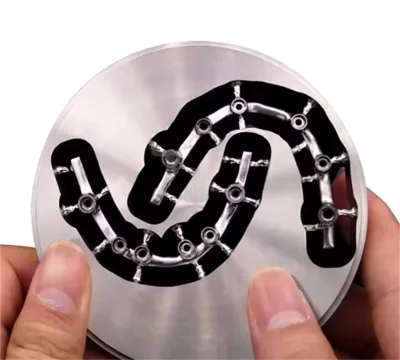
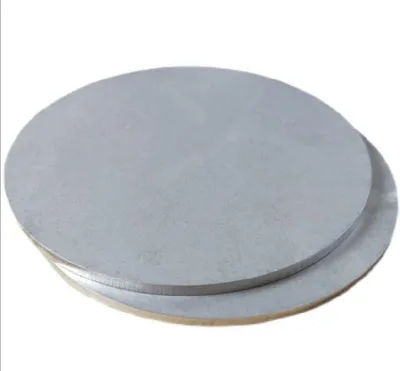
For the specific titanium variant, the material is explicitly identified as metal, with a pure titanium composition noted in several listings. These discs are characterized by a round shape and a silver color, aligning with the natural appearance of titanium alloys. The physical dimensions are critical for compatibility with dental CAD/CAM systems and milling machines. Observed specifications indicate a thickness range of 10-25mm, which is a significant variance that requires precise matching to the buyer's milling equipment. The system dimensions are noted as 98mm and 95mm, suggesting specific diameter requirements for the disc blocks.
In contrast, the market also features ceramic-based alternatives, such as dental zirconia discs, which are non-disposable and reusable in certain contexts or designed for different processing stages. These zirconia products list a strength of 1100-1350 MPa or 1200 MPa, with translucency values ranging from 30% to 49% and a sintering temperature of 1530°C. While the core keyword focuses on titanium, a buyer must verify whether the supplier is offering the metal disc for initial processing or a ceramic disc for final restoration. The distinction is vital because the "disposable" attribute in the keyword suggests a single-use application, which aligns with the "Usage Times: Disposable" flag found in the product attributes for the titanium items, whereas zirconia discs are often listed as "Non-Disposable."
The following table summarizes the key technical attributes observed in the supply data to assist in specification verification:
| Attribute | Titanium Disc Variant | Zirconia Disc Variant |
|---|---|---|
| Material | Metal (Pure Titanium) | Ceramics (Zirconia) |
| Usage Times | Disposable | Non-Disposable |
| Shape | Round | Round |
| Color | Silver | Vita 16 Color / 16 Shades |
| Thickness | 10-25mm | Variable (Model dependent) |
| System Size | 95mm / 98mm | Model: HT, ST, UT, 3DP |
| Strength | Not explicitly listed | 1100-1350 MPa / 1200 MPa |
| Translucency | N/A | 30%-49% / 43% |
| Application | Denture Processing, Planting | Crown, Bridge, Implant |
Compliance and Certification Verification
In the medical device sector, particularly for items entering the dental department, compliance is not merely a formality but a prerequisite for market access and patient safety. The product data highlights specific certifications that buyers should look for to validate the legitimacy of the supply chain. The most prominent certification observed is the CE mark, which indicates conformity with health, safety, and environmental protection standards for products sold within the European Economic Area. Additionally, the ISO 13485 certification is explicitly mentioned. This standard is specific to medical devices and outlines the requirements for a quality management system where an organization needs to demonstrate its ability to provide medical devices and related services that consistently meet customer and applicable regulatory requirements.
When evaluating a supplier, the presence of the "CE" and "ISO 13485" tags in the product description is a strong indicator of adherence to international quality norms. However, buyers must treat these as observations rather than guaranteed facts for every listed item. The procurement process should involve a direct request for the actual certificate documents to verify the scope of the certification. For instance, does the ISO 13485 certification cover the manufacturing of the titanium discs specifically, or is it a general company certification? The data also lists "Cetification: CE" in one instance, which appears to be a typographical variation of "Certification," but the intent remains the same.
Buyers should also verify the origin of the products. The supplied data consistently points to "Hebei, China" or "Hebei Province China" as the production origin. While this location is a major hub for medical device manufacturing, it necessitates rigorous due diligence regarding the specific factory's compliance history. The "Standard" attribute in the data lists packaging dimensions such as 202010 cm or 14.5cm14.5cm4.5cm, which may relate to the product's physical standard rather than an international safety standard. Therefore, the primary focus for compliance must remain on the ISO and CE documentation.
Cost Drivers and Pricing Dynamics
The pricing landscape for disposable dental titanium discs is highly variable, with an observed range spanning from $0.28 to $150,000 USD. This extreme disparity is not indicative of a single product line but rather reflects the diversity of the market, which includes low-cost consumables and high-value industrial equipment or bulk industrial orders. The lower end of the spectrum likely corresponds to single-unit purchases of small, disposable discs, while the upper end may represent large-scale industrial machinery, bulk orders with significant volume discounts, or specialized equipment bundles.
Several factors drive the cost of these discs. First, the material composition plays a role; pure titanium is a premium material compared to standard alloys, and the purity level can influence the price. Second, the customization options available, such as OEM (Original Equipment Manufacturer) services, can add to the cost. The data confirms that customization and OEM are available, meaning buyers can request specific branding, dimensions, or packaging, which typically incurs a setup fee or higher unit cost. Third, the packaging requirements, listed as "Carton" or "Hard Carton," and the specific standard dimensions (e.g., L50cmW33cmH35cm) affect logistics costs, which are often factored into the final price.
The Minimum Order Quantity (MOQ) is another critical cost driver. The observed MOQ range is 1 to 200 pieces. An MOQ of 1 piece allows for sample acquisition and small-scale testing, which is essential for quality verification before committing to larger orders. However, higher MOQs often correlate with lower per-unit costs. Buyers must balance the need for inventory against the cash flow implications of ordering in bulk. The "Selling Units" are listed as "Single Item," suggesting flexibility in purchasing, but the actual transaction terms will depend on the supplier's specific policy.
Typical Applications and Departmental Fit
The primary application for these disposable dental titanium discs is within the dental department, specifically for denture processing and planting material. The "Usage" attribute explicitly states "Denture Processing, Planting Material," indicating that these discs are used as raw material or tools in the fabrication of dental prosthetics. The "Indication" for related zirconia discs includes Crown, Bridge, and Implant, suggesting that the titanium discs may serve a similar purpose in the initial stages of implant fabrication or as a base material for further processing.
The "Nature" of the product is defined as "Specialized Instrument Equipment," which implies that these are not general-purpose tools but are designed for specific, high-precision tasks in a clinical or laboratory setting. The "Disposable" usage time suggests that these discs are intended for single-use scenarios, possibly to prevent cross-contamination or to ensure consistent quality in every procedure. This is particularly relevant in the context of "Planting Material," where sterility and material integrity are paramount.
The versatility of the product is further highlighted by the "Customization" and "OEM" availability. This allows dental laboratories and clinics to tailor the discs to their specific milling machines or processing workflows. The "System" dimensions of 98mm and 95mm suggest compatibility with standard dental CAD/CAM systems, which often require specific disc sizes to fit their rotary mechanisms. Buyers should ensure that the selected disc dimensions match their existing equipment to avoid operational disruptions.
Supplier Evaluation and Origin Considerations
When evaluating suppliers for disposable dental titanium discs, the geographic origin is a significant factor. The data consistently identifies "Hebei, China" as the production location. Hebei Province is a known manufacturing center, but buyers should verify the specific factory's capabilities and reputation. The presence of a "Sample Provided: Yes" attribute is a positive indicator, allowing buyers to test the product quality before committing to a bulk order. The availability of samples is crucial for verifying the "Strength," "Translucency," and physical dimensions of the discs.
The brand "Kingch" is mentioned in the data, but buyers should not rely on a single brand name. Instead, they should evaluate the supplier based on their ability to meet the "OEM" and "Customization" requirements. The "Molde No" (Mold Number) listing, which includes codes like "Ht HS St Stc Stm Ut Utc 3dm 3dp," suggests a complex inventory system with various models. Buyers should request a detailed catalog or specification sheet that maps these model numbers to specific technical attributes to ensure they are selecting the correct product.
Supplier reliability can also be assessed through their packaging standards. The data lists "prod_packing" as "Carton" or "Hard Carton," and "prod_standard" dimensions. A supplier that provides robust packaging, such as hard cartons, demonstrates a commitment to protecting the product during transit, which is essential for maintaining the integrity of precision instruments. Additionally, the "Sample" availability and the "OEM: Acceptable" status indicate a supplier that is willing to engage in a collaborative relationship, which is beneficial for long-term procurement.
Quality Control and Long-Term Procurement Strategy
Quality control for disposable dental titanium discs must focus on material purity, dimensional accuracy, and sterility. The "Strength" attribute, while more prominent in the zirconia listings, is a critical metric for any dental material. Buyers should request test results or quality assurance reports that confirm the material meets the required specifications for dental applications. The "Transmittance" and "Sintering Temperature" data for zirconia discs highlight the importance of thermal properties, which may also be relevant for titanium processing if heat treatment is involved.
For long-term procurement, establishing a relationship with a supplier that offers consistent quality and reliable lead times is essential. The "Lead Time" is not explicitly provided in the data, but the "MOQ" range of 1-200 suggests that suppliers are capable of handling both small and large orders. Buyers should negotiate terms that allow for flexible ordering, such as the ability to start with a sample order and scale up as the product proves effective. The "Customization" and "OEM" options should be leveraged to create a unique product line that aligns with the buyer's brand and specific clinical needs.
Finally, buyers should maintain a clear distinction between the "Disposable" titanium discs and the "Non-Disposable" zirconia discs in their inventory management. Confusing these two categories could lead to operational inefficiencies or compliance issues. By adhering to the technical specifications, verifying certifications, and conducting rigorous quality control, buyers can ensure a steady supply of high-quality disposable dental titanium discs that meet the demands of the dental department.
FAQs
What certifications do disposable dental titanium discs have?
These discs typically carry CE and ISO 13485 certifications for medical device compliance. Buyers should verify specific certificate documents to ensure the scope covers the manufacturing of titanium discs specifically rather than general company certification.
Which material is used for disposable dental titanium discs?
The primary material is pure metal, specifically identified as pure titanium. This distinguishes them from ceramic zirconia alternatives, ensuring the correct physical properties for denture processing and planting material applications.
Can I customize the dimensions of these titanium discs?
Yes, customization and OEM services are available for these specialized instruments. Buyers can request specific branding or dimensions, though this may incur setup fees or affect the unit cost depending on the supplier.
What is the typical thickness range for these dental discs?
The observed thickness range for these products is between 10mm and 25mm. This variance requires precise matching to the buyer's specific milling equipment to ensure compatibility with dental CAD systems.
Where are these dental titanium discs manufactured?
The products originate from Hebei Province in China, a known manufacturing hub for medical devices. Buyers should verify the specific factory's compliance history and quality management systems despite the common regional origin.
What is the minimum order quantity for these discs?
The minimum order quantity can be as low as one piece for sample acquisition. Higher quantities often correlate with lower per-unit costs, allowing buyers to balance inventory needs with cash flow implications.